3GPP 38.300 v19.3.0 — the document's own text
9.2.2.4.1 UE triggered transition from RRC_INACTIVE to RRC_CONNECTED
Taught in 7. How a connection is set up, and how it is moved (TSG RAN — the group that specifies the radio, in depth).
The following figure describes the UE triggered transition from RRC_INACTIVE to RRC_CONNECTED in case of UE context retrieval success:
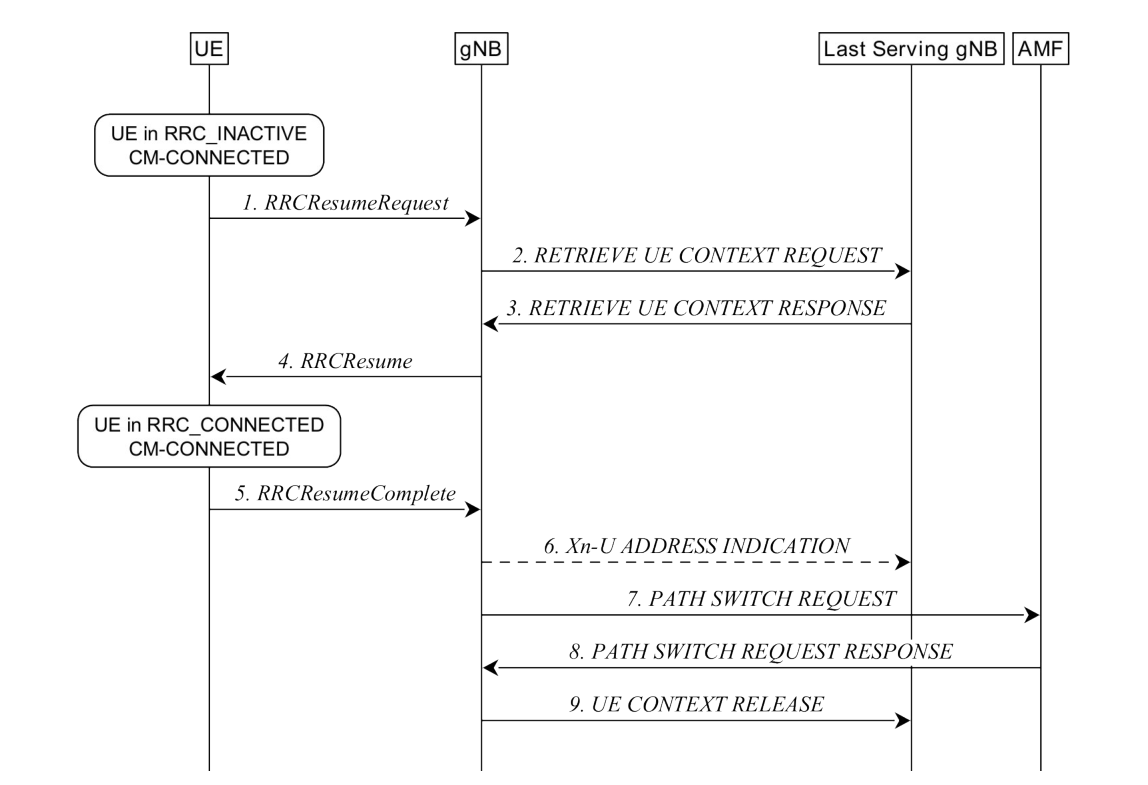
1. The UE resumes from RRC_INACTIVE, providing the I-RNTI, allocated by the last serving gNB.
2. The gNB, if able to resolve the gNB identity contained in the I-RNTI, requests the last serving gNB to provide UE Context data.
3. The last serving gNB provides UE context data.
4/5. The gNB and UE completes the resumption of the RRC connection.
NOTE 1: User Data can also be sent in step 5 if the grant allows.
6. If loss of DL user data buffered in the last serving gNB shall be prevented, the gNB provides forwarding addresses.
7/8. The gNB performs path switch.
9. The gNB triggers the release of the UE resources at the last serving gNB.
After step 1 above, when the gNB decides to use a single RRC message to reject the Resume Request right away and keep the UE in RRC_INACTIVE without any reconfiguration (e.g. as described in the two examples below), or when the gNB decides to setup a new RRC connection, SRB0 (without security) is used. Conversely, when the gNB decides to reconfigure the UE (e.g. with a new DRX cycle or RNA) or when the gNB decides to push the UE to RRC_IDLE, SRB1 (with integrity protection and ciphering as previously configured for that SRB) shall be used.
NOTE 2: SRB1 can only be used once the UE Context is retrieved i.e. after step 3.
The following figure describes the UE triggered transition from RRC_INACTIVE to RRC_CONNECTED in case of UE context retrieval failure:
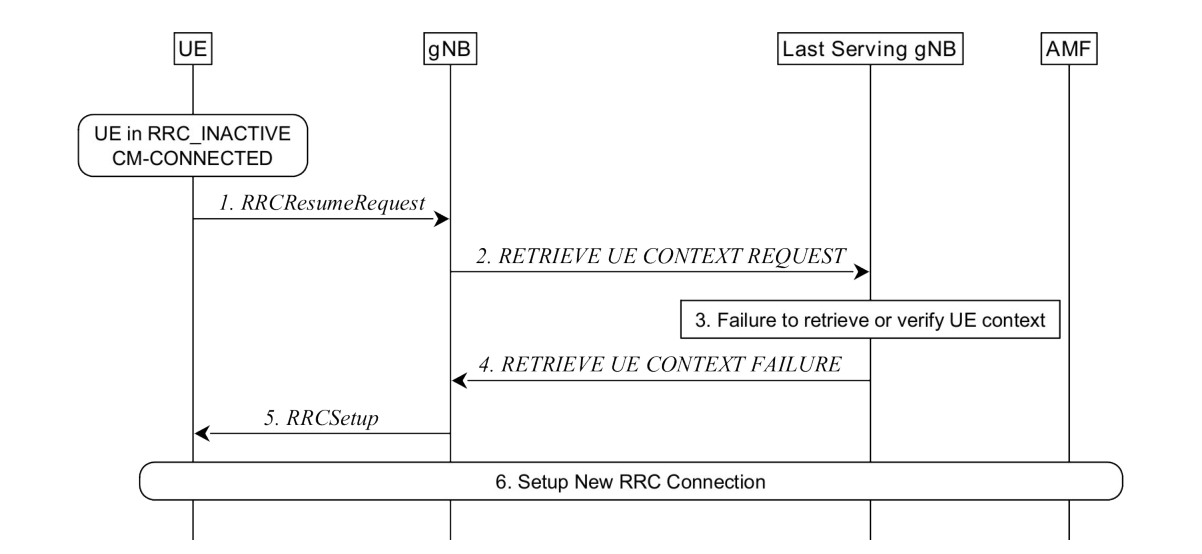
1. The UE resumes from RRC_INACTIVE, providing the I-RNTI, allocated by the last serving gNB.
2. The gNB, if able to resolve the gNB identity contained in the I-RNTI, requests the last serving gNB to provide UE Context data.
3. The last serving gNB cannot retrieve or verify the UE context data.
4. The last serving gNB indicates the failure to the gNB.
5. The gNB performs a fallback to establish a new RRC connection by sending RRCSetup.
6. A new connection is setup as described in clause 9.2.1.3.
The following figure describes the rejection form the network when the UE attempts to resume a connection from RRC_INACTIVE:
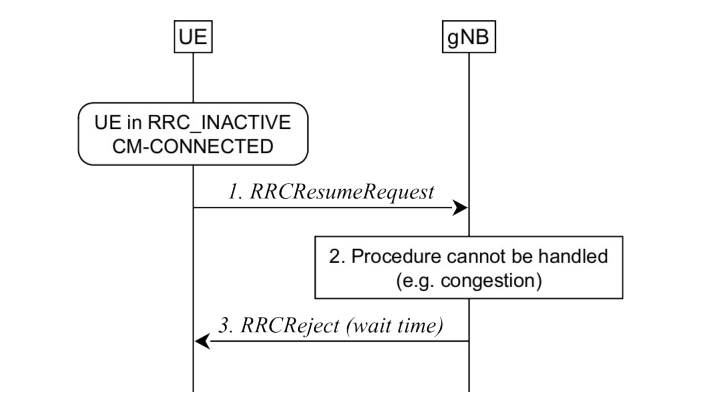
1. UE attempts to resume the connection from RRC_INACTIVE.
2. The gNB is not able to handle the procedure, for instance due to congestion.
3. The gNB sends RRCReject (with a wait time) to keep the UE in RRC_INACTIVE.