3GPP 38.300 v19.3.0 — the document's own text
18.4 MT-SDT with/without UE context relocation
The overall procedure for MT-SDT procedure with/without UE context relocation is illustrated in the figure 18.4-1.
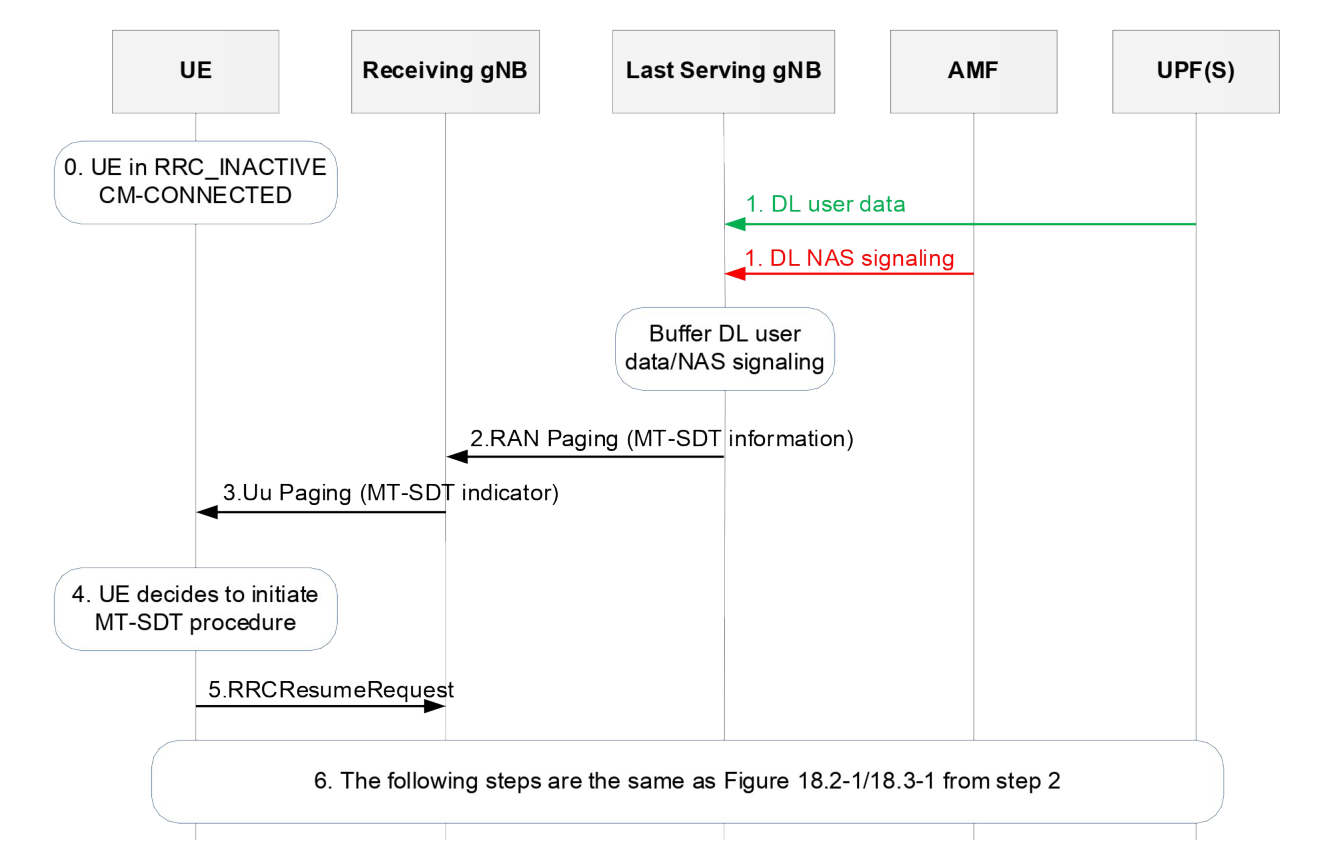
1. DL user data and/or DL NAS signalling are received at the Last Serving gNB for the UE in RRC_INACTIVE state, or RAN Paging request message is received at the Last Serving gNB for the UE in RRC_INACTIVE state with long eDRX(cycle) beyond 10.24 seconds.
2. The Last Serving gNB may send MT-SDT information to the neighbour gNBs within the RNA, via XnAP RAN PAGING message.
3. The gNB that receives MT-SDT information within the RNA, takes into account the MT-SDT information received in the XnAP RAN PAGING message to decide whether to trigger MT-SDT Paging. The gNB which ultimately reaches the UE via the Uu Paging becomes the Receiving gNB.
NOTE 1: In case that the Receiving gNB decides not to trigger MT-SDT paging, the above step 3 and subsequent steps are the same as Figure 9.2.2.4.2 from step 3.
4/5. The UE may decide to initiate MT-SDT procedure and in this case sends an RRCResumeRequest message with an MT-SDT resume cause to the Receiving gNB.
6. The following steps are the same as Figure 18.2-1/18.3-1 from step 2, except that the first SDT user data and/or NAS signalling is DL SDT data and/or DL SDT NAS signalling.
NOTE 2: In case DL non-SDT data or DL non-SDT signalling has arrived between step 2 and step 6, the Last Serving gNB should relocate the UE context to the Receiving gNB and forward the received data to the Receiving gNB.