3GPP 23.501 v20.2.0 — the document's own text
S.2 System architecture for MWAB operation in PLMNs
Taught in 26. Relays, satellites, femtos and shared networks (The 5G system architecture, in depth).
Figures S.2-1 and S.2-2 present an example architecture for the MWAB operation when no roaming was involved for the MWAB-UE. In this case, there may be one or two PLMNs involved, i.e. the BH PLMN that serves the MWAB-UE and the MWAB Broadcasted PLMN that serves the UE connected to the MWAB can be the same or different.
The MWAB-gNB logically belongs to MWAB Broadcasted PLMN and announces the PLMN IDs of the MWAB Broadcasted PLMN. The MWAB-gNB establishes N2 and N3 connection with the UE AMF and UE UPF in the MWAB Broadcasted PLMN via the PDU session of the MWAB-UE established with BH PLMN.
The BH UPF in the BH PLMN serves the MWAB-UE and provides the connection via a N6 interface towards the MWAB Broadcasted PLMN, to carry the N2 and N3 traffic from MWAB-gNB. The BH UPF also supports the access to the OAM servers in the MWAB Broadcasted PLMN by the MWAB-gNB.
NOTE: Depending on deployment requirement, a security gateway may be required between the BH UPF and the MWAB Broadcasted PLMN network. In that case, the MWAB-gNB need to connect to the security gateway based on pre-configured security credentials. The traffic between MWAB-gNB and the MWAB Broadcasted PLMN goes inside the security tunnel established via the security gateway.
UE connected to the MWAB-gNB can access the 5GS services offered by MWAB Broadcasted PLMN. No MWAB specific enhancement to the UE is required. The UE connected to the MWAB-gNB is not aware of the BH PLMN and thus does not need any roaming agreement between its HPLMN and the BH PLMN.
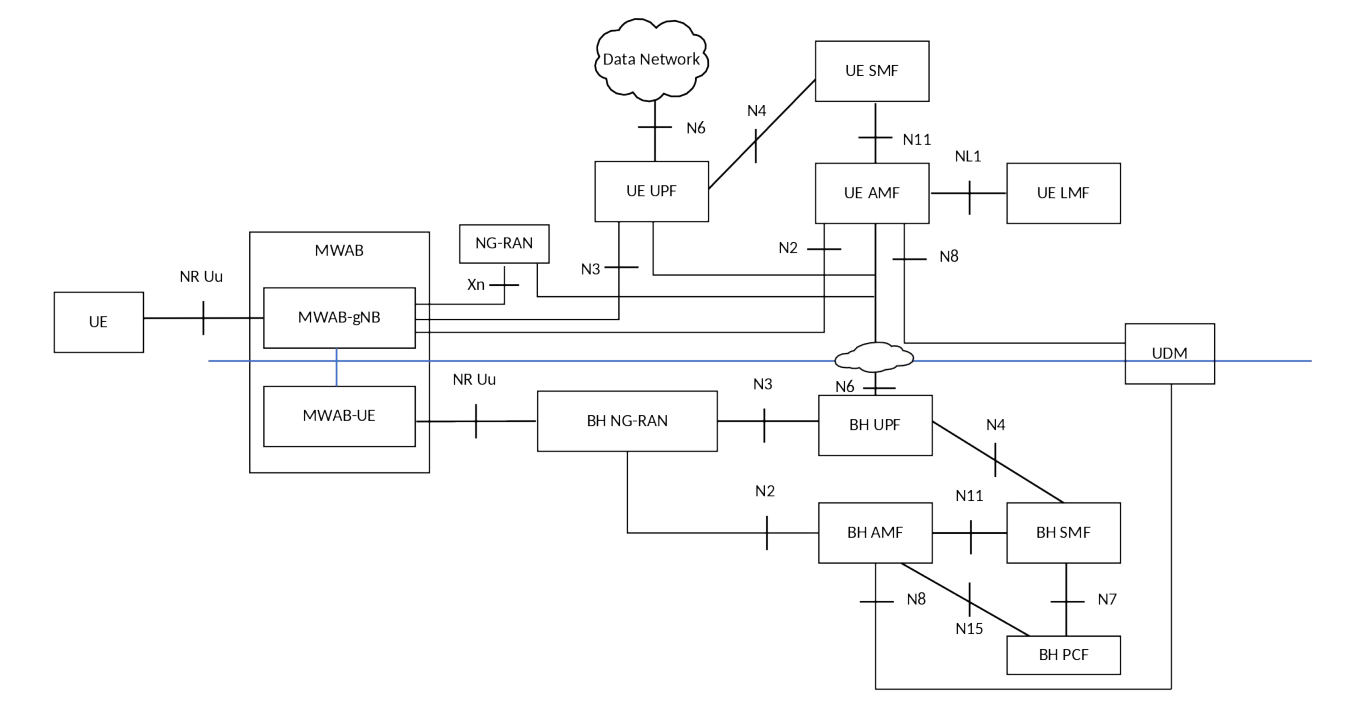
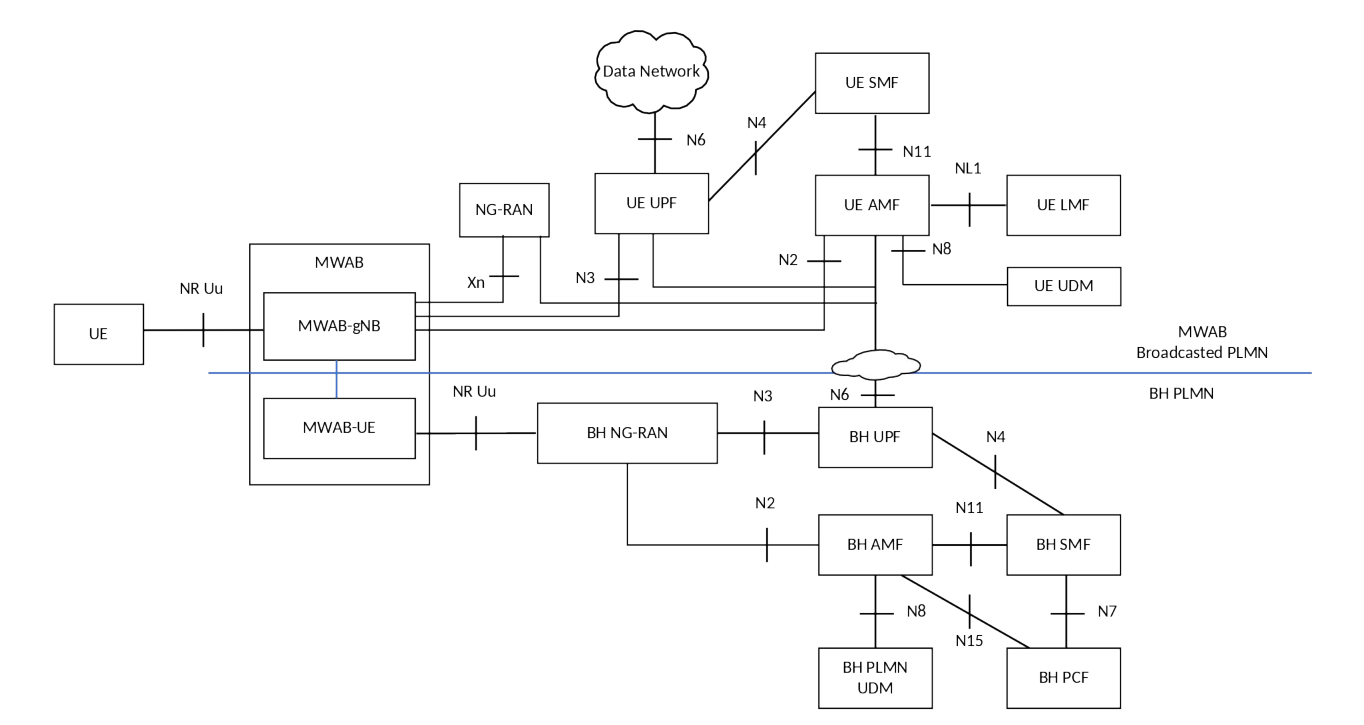
Figure S.2-3 presents an example architecture for the MWAB operation when MWAB-UE is roaming with a Local Breakout PDU Session for its operation. In this case, there may be three PLMNs involved, i.e. the BH PLMN that serves the MWAB-UE and the MWAB Broadcasted PLMN that serves the UE connected to the MWAB and the HPLMN of the MWAB-UE. The use of the Local Breakout PDU Session by the MWAB-UE can be configured by its HPLMN, e.g. with some VPLMN specific URSP rules. In some cases, the BH PLMN and MWAB Broadcasted PLMN can be the same PLMN as illustrated in figure S.2-1.
The BH PLMN can access the MWAB-UE's HPLMN UDM for the subscription information. The rest of the operations are similar to that shown in figure S.2-1 and figure S.2-2.
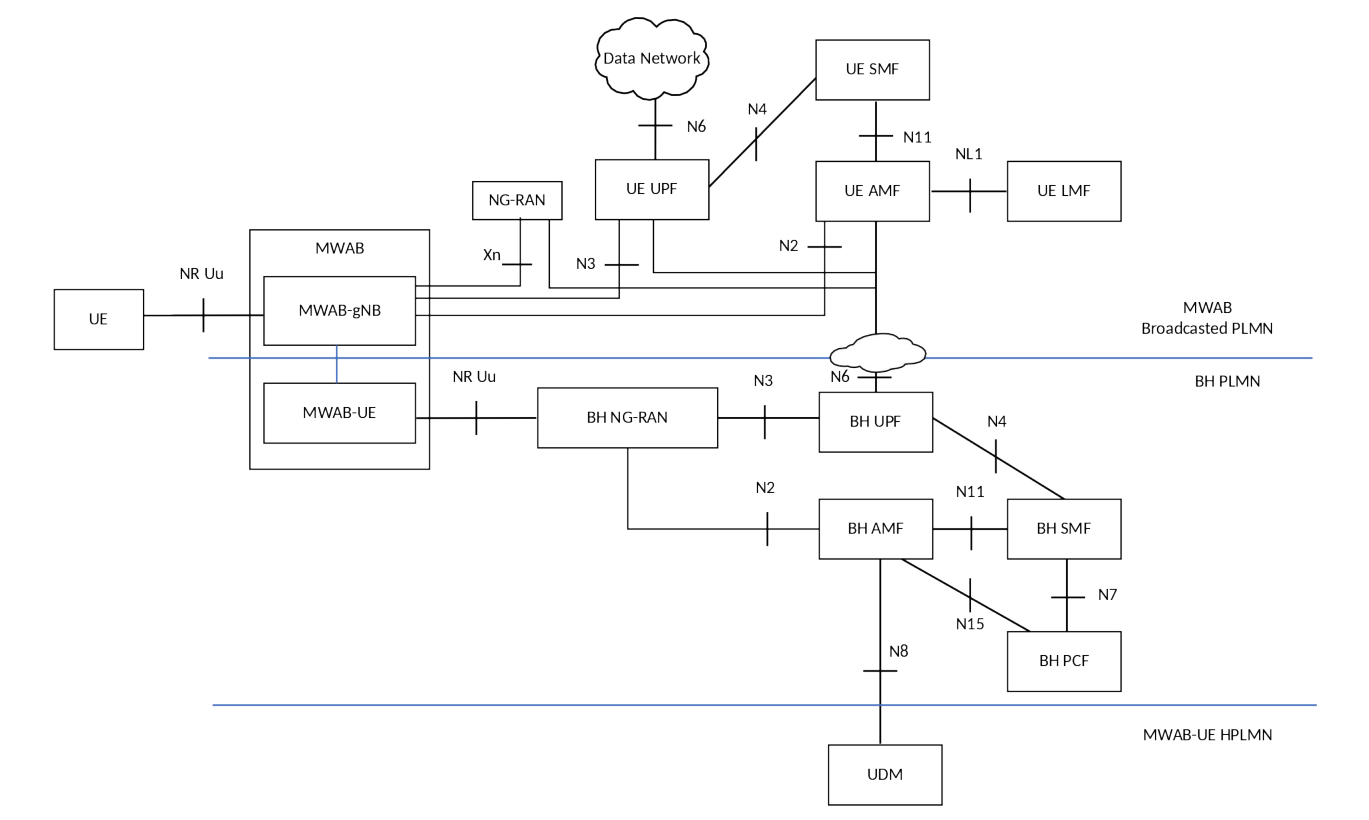
Figure S.2-4 presents an example architecture for the MWAB operation when MWAB-UE is roaming with a Home Routed PDU session for its operation. In this case, PDU session of the MWAB-UE is routed by BH PLMN to the HPLMN of the MWAB-UE. The rest of the operations are similar to that shown in figure S.2-3. In some cases, the BH PLMN and MWAB Broadcasted PLMN can be the same PLMN as illustrated in figure S.2-1.
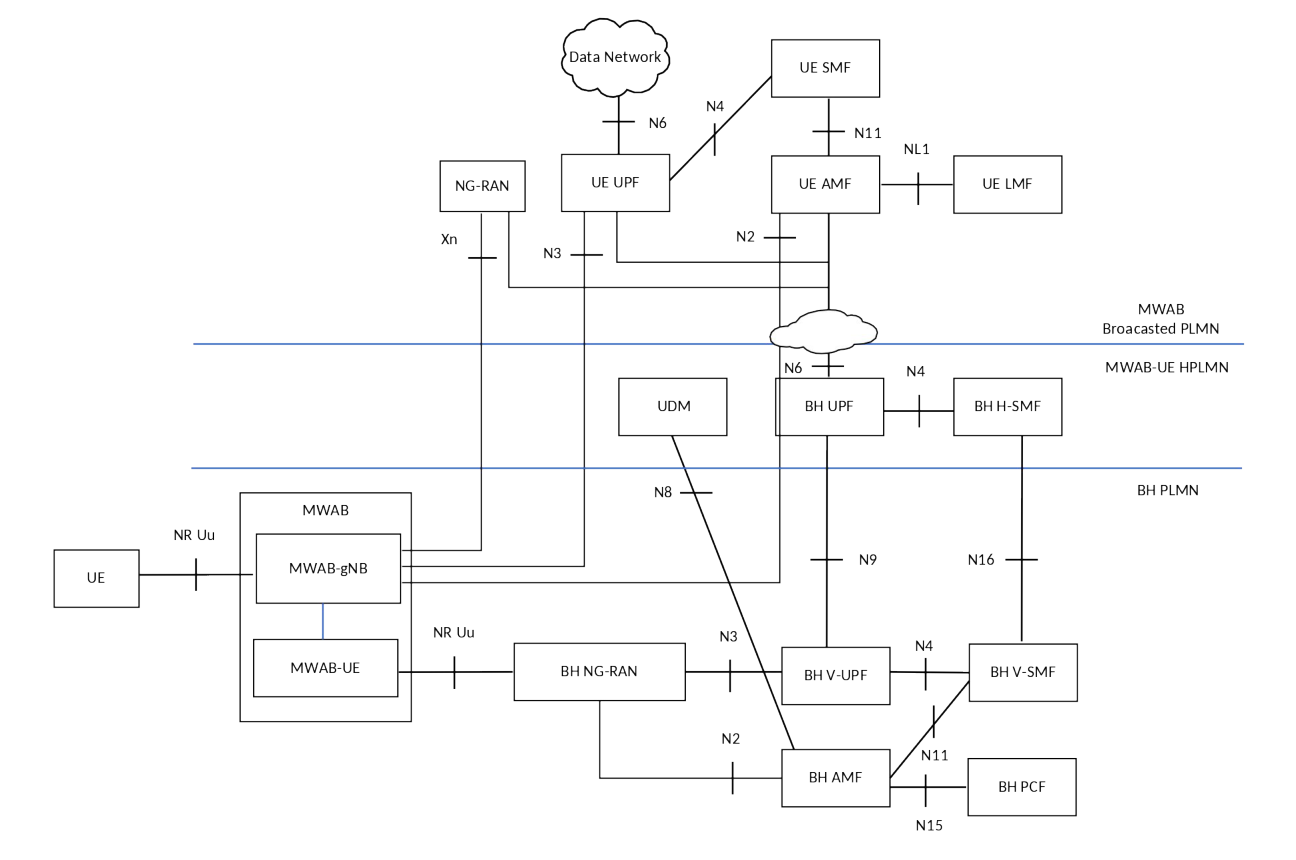
In figure S.2-1, figure S.2-2, figure S.2-3 and figure S.2-4, if the UE served by the MWAB is roaming, there can be another PLMN (not shown in the figures), i.e. the HPLMN of the UE served by the MWAB, involved. The interaction of the HPLMN of the UE and the MWAB Broadcasted PLMN follows that described in clause 4.2.4 for the roaming case. The UE served by the MWAB-gNB is not aware of BH PLMN and thus does not need any roaming agreement between its HPLMN and the BH PLMN.